
Homepage
Is it just a load of old stones and pots?
A guest post from author Alison Morton to celebrate the launch of her new Roma Nova novel, HEROICA
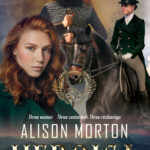
Today I’ve handed over the reins to Alison Morton. Alison writes award-winning thrillers featuring tough but compassionate heroines. Her twelve-book Roma Nova series is set in an imaginary European country where a remnant of the Roman Empire has survived into the 21st century and is ruled by women who face conspiracy, revolution and heartache but…
» Continue Reading
Letting in the Light
A collection of quotes about the joy of reading
“Before reading, the world is experienced; after, it becomes interpretable as well.” ~ JC Monnerville I’ve spent the last four years writing about two great readers, James and Dorcas Lackington. James wrote in his first memoir that his wife was “ immoderately fond of books.” In fact, it was the thought to reading to and…
» Continue Reading
When Bookselling was a Dangerous Business
The 18th Century crack-down on booksellers who sold political philosophy
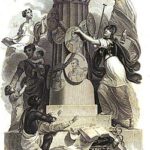
In 1789, George III’s recovery from illness triggered nationwide celebrations that “exceeded every thing before known.” But were they really “grateful testimonies of a nation’s love”? On 3rd April, the King issued a Royal Proclamation ordering that a day of thanksgiving be observed throughout the Kingdom to mark his recovery. Coupled with his first public…
» Continue Reading
Putting the Temple of the Muses back on the map
Solving the Location Puzzle of the Temple of the Muses
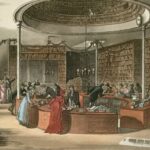
The Temple of the Muses was probably the largest single shop in 18th Century England. James Lackington’s trade card boasted it was “the finest shop in the world”. Arguably, Josiah Wedgwood’s intimate London showroom was more luxurious, showcasing his ceramics as if they were works of art, and admired by his elite clientele, including royalty….
» Continue Reading

The main protagonist in my novel, My Counterfeit Self, is Lucy Forrester, a political poet and activist. Having been anti-establishment all of her life, she’s horrified to find that she’s been featured on the New Year’s Honours list. Her inclination is to turn it down. But what if it’s an opportunity… WB Yeats said that…
» Continue Reading
The Four 18th-Century Publishers and Booksellers Who Made Reading Affordable
How John Bell, Alexander Donaldson, James Lackington and others transformed the book trade and brought cheap literature to ordinary readers

Today it is easy to forget that books were once luxury goods. A modern reader can buy a novel for a few pounds, download thousands of classics completely free, or borrow almost anything from a library. But in the early eighteenth century, owning a finely bound volume was a privilege reserved largely for the wealthy….
» Continue Reading

When researching an entirely different story in the autumn of 2022, I visited the ancient church of St Mary the Virgin, Merton. Walking among the gravestones, one caught my eye: Dorcas, Wife of J Lackington Bookseller, Finsbury Square Ladies who chance to frisk this way, With honest Hearts and Spirits gay. A serious moment give…
» Continue Reading

Imagine stepping inside The Temple of the Muses in Finsbury Square — the bookshop famed in Georgian London as the largest in Europe. Shelves teem with novels, histories, pamphlets and curiosities. Priceless tomes sit side by side with cheap editions. Amid the bustle, male shop assistants in black frock-coats stand behind the circular counter underneath…
» Continue Reading

In the bustling heart of Georgian London, James and Dorcas Lackington didn’t just open a bookshop—they created a cultural landmark. As their business outgrew its Chiswell Street premises, the Lackingtons dared to think bigger: a temple to books. Situated on one side of Finsbury Square (32 Finsbury Place South) and designed by architect George Dance,…
» Continue Reading

Today, we take it for granted that books are within our grasp, but it wasn’t always so. By the late 18th century, literacy in England was steadily improving. Based on the ability to write their signature at the time of their marriages, historians estimate that approximately half of the population could read. But owning a…
» Continue Reading
Press
Want to be featured?
Host a bookclub
Latest books

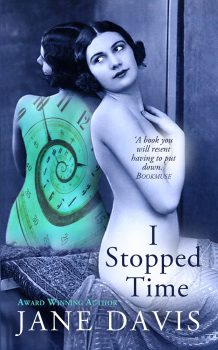






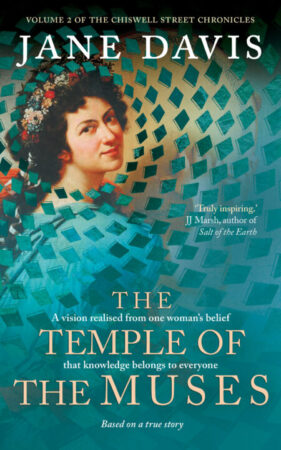
Read an excerpt
Author Member of The Alliance of Independent Authors
