
Virtual Book Club: Al Bacon on her novel, The Absent Heart
Inspired by the letters of Robert Louis Stevenson

Today I’m delighted to welcome award-winning author Ali Bacon Virtual Book Club, my author interview series in which authors have the opportunity to pitch their book to your book club.
After graduating from St Andrews University, Ali moved to the South West of England where her writing is still strongly influenced by her Scottish roots. This is her second historical novel after In the Blink of an Eye which was listed in the ASLS best Scottish books of that year. Short story successes include Evesham Short Story Prize, Bristol Short Story Prize, Local Writer. She conceived The Absent Heart through a family connection to the writer, Robert Louis Stevenson.
Book Description
In this beguiling account of a three-way relationship, Ali Bacon unveils the woman who had a profound influence on one of the greatest writers of his age, Robert Louis Stevenson.
In 1870, Frances Sitwell, beautiful, intelligent and trapped in an abusive marriage, is grateful for the chaste affection offered by rising literary star, Sidney Colvin. They make a perfect couple until the young Robert Louis Stevenson bursts into their lives to captivate them with his wild, mercurial spirit and startlingly original talent. Louis immediately falls in love with Frances. As her feelings for Sidney cool, and Louis’s entreaties become irresistible, she encourages him to express his feelings in letters, which he does with unconcealed passion.
With Louis’s death, these emotional outpourings, written for Frances’s eyes only, fall into Sidney’s hands. His subsequent anger takes Frances by surprise and she begins to question the nature of his feelings for Louis.
As friendship, love and desire are put to the test, can Frances find the courage to secure her future happiness as well as her place in history?
Welcome back to Virtual Book Club, Ali. A family connection with Robert Louis Stevenson! How intriguing.
My maternal great great uncle, Charles Lowe, knew Robert Louis Stevenson at university. Charles Lowe became foreign correspondent to The Times.
So he was part of family mythology, as it were.
You tell the story predominantly from Frances Sitwell’s standpoint. Can you tell me a little bit about women’s rights at the time. Frances demanded a legal separation from a man of the cloth. How much courage would this step have taken?
Although divorce was technically possible for a woman from the mid nineteenth century onwards, it was complicated and likely to be costly. Many couples undertook ‘private separation’ with a contract drawn up, but as Albert Sitwell was a vicar, Frances, as I understand it, would have had to apply for separation through the ecclesiastical courts, giving evidence of cruelty or adultery. The entire case would be investigated in detail and any wrongdoing on her part might result in her losing alimony payments. On the other hand, many women did achieve independence (Geoge Eliot lived openly with a married man) and I suspect there were double standards operating at least in the middle classes. It looks like Frances and Sidney’s relationship was condoned by all of their personal friends, but couldn’t be openly acknowledged for fear of the separation not going through.

I know from reading your previous novel In the Blink of an Eye that you are meticulous in your research. Can you tell me what drew you to Robert Louis Stevenson’s letters?
I had read biographies of RLS and his wife Fanny, but I’m not sure I had seem Frances as a possible heroine until I visited Cockfield in Suffolk where her meeting with RLS and their correspondence was described in a leaflet I picked up in the local church. From that point the letters were my main source, because they were all I had to go on! Frances was to become a well-known society figure, but at that point in her life she was keeping a low profile. The fact that her replies to RLS were destroyed made it all the more intriguing.
What was the greatest surprise they contained?
Firstly the level of emotion he shows towards Frances, but also how they reveal the character of the man himself. They way he is described by other people (see the quote below from Colvin) somehow comes across, his lively intelligence, his dedication to his craft and also his air of self-deprecation. He simply puts himself on the page. J.M. Barrie (of Peter Pan fame) never met him but they became firm friends through correspondence. I find this totally believable. I have become a fan in the same way!
What did Louis’s letters reveal about the emerging writer?
Mostly his dedication. In becoming a writer he was defying his family’s ambitions for him. He was determined to learn all he could by reading voraciously (including in other languages, his range was extraordinary) and, if necessary, copying the style of others. Today he would have seen himself as going through a creative writing apprenticeship and he was enormously grateful for the help offered in this by France and Sidney Colvin. In his letters to Frances he sometimes tried out descriptive passages and asked her to save them for future reference.
Sidney Colvin wrote of Louis, “If you want to realise the kind of effect he made, at least in the early years when I knew him best, imagine this attenuated but extraordinarily vivid and vital presence, with something about it that at first struck you as freakish, rare, fantastic, a touch of the elfin and unearthly, a sprite, an Ariel.” How did you approach the challenge of writing about Robert Louis Stevenson when he was so obviously a sheer force of nature?
I did hesitate over tackling someone so distinctive and so celebrated but of course Frances’s story only made sense with him in it! I actually like the leap into the unknown of writing men’s voices and the novel originally had whole chapters in his point of view and also Sidney Colvin’s. Although those sections were eventually (and reluctantly!) cut, I suppose by then I had a clear vision of him and the sound of his voice in my mind, so I just went for it and hoped for the best.
Before you began reading the letters, were you aware of Frances Sitwell and her relationship with ‘Louis’?
Yes, I was thinking of writing about Fanny Osburne, Stevenson’s wife, but a lot has already been written about her, including fiction. As soon as Frances came to light, I began to focus on her and found more than enough to occupy me.
It would come as no surprise if a whirlwind of a young man such as Louis and a beautiful intelligent woman such as Frances were drawn to each other. How much poetic licence did you allow yourself in imagining their relationship?
Quite a lot! Recent biographers and commentators tend to assume the feelings were mostly on his side – a young man’s crush on an older woman (he did seem to seek out mother figures). However there are many phrases in the letters which hint that the feelings were mutual. Of course that may have been his imagination, but he was no ordinary young man and I imagine Frances as vulnerable to his charms. Apart from physical attraction, she had recently lost a son and could just as easily have been filling a void as he was. The ‘standard’ modern biography by Claire Harman sits on the fence but does see some evidence for a physical affair. The quotation from Frances I include at the end of the novel could also be read as mischievously coy!

Lack of concrete evidence creates great opportunity for novelists. When inventing scenes, what boundaries did you set yourself?
From my previous novel In the Blink of an Eye, I was used to working around the historical record, and most of what I found out along the way presented opportunities rather than restrictions, but writing about real people is always a bit dicey. (I explored this in a recent blog post for The History Quill Biographical fiction: the pleasure and pain of writing about real lives – The History Quill) . I didn’t intentionally subvert or bend history, although I did introduce one fictional character rather than find a real historical figure to play the part required. I think the biggest problem was getting under Frances’s skin as there’s not much to go on historically, and deciding what she would have really thought and what actions she would have taken.
How many letters from Frances Sitwell actually survive to this day?
I’ve seen one or two referred to but can’t dig up precise references. One is to Louis, another is to Fanny Stevenson. but from much later in her life than during the white heat of Louis’s correspondence Basically there is next to nothing – unless someone unearths a hidden cache somewhere (something I considered as a plot twist, but ultimately rejected!)
The contrast between Frances Sitwell and RSL’s wife Fanny couldn’t have been more stark. It is also said that Sidney Colvin disliked her influence over him, especially their decision to settle in Samoa, and his belief that RSL’s literary career would suffer. You chose to give us chapters from Fanny Stevenson’s point of view. How important was it to you to give her a voice?
I didn’t at first see Fanny as playing a big part in the novel and she has been given a voice by other writers (e.g., Nancy Horan in Under the Wide and Starry Sky). However, I came to realise that she and Frances had been good friends for a while (the meeting I describe in 1878 did take place), but there was also evidence of jealousy between them. Mostly she is there as a foil to Frances but also to emphasise that this is the story of women whose men claimed most of the limelight.
Despite Frances’s relationship with Sidney Colvin, the couple didn’t marry until she was 63. Although she has been portrayed as a scandalous woman of society, you paint a portrait of someone who cares very much about other’s opinions. Why do you think that they waited so long?
The stock answer to this is that Sidney Colvin (his family fortune had been squandered by a brother) had to provide for his mother, and so he and Frances waited until after her death, but I’m unconvinced! Frances in my eyes would never have courted scandal, nor would Sidney, but I’ve found other more nuanced reasons in the novel for the delay (were there doubts on either side? was either of them quite ready?). Possibly another bending of history!
Buying links:
From Linen Press https://www.linen-press.com/shop/the-absent-heart/
Price: £9.99 paperback and £5.99 e-book
From Amazon UK https://www.amazon.co.uk/Absent-Heart-Ali-Bacon/ (also worldwide)
Or order from your favourite bookshop
ISBN: 9781739443160 (paperback)
Related Posts
Novels about photographers and photography
Virtual Book Club: Ali Bacon introduces In The Blink of an Eye
My review of The Absent Heart on Amazon
***

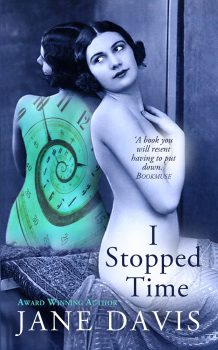
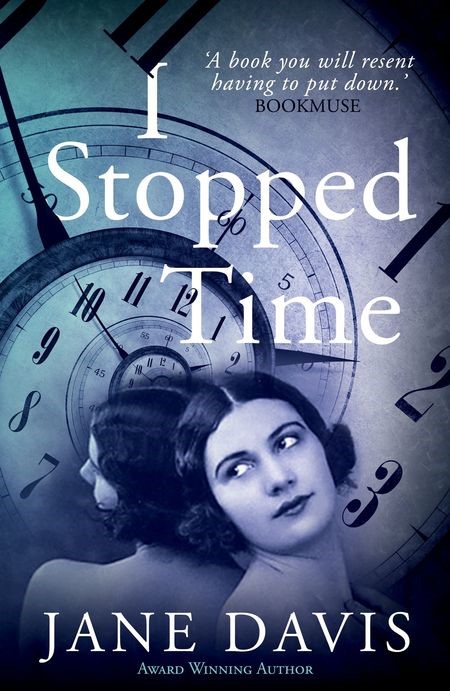
To have future posts delivered directly to your in-box, visit the sidebar on the right and subscribe to my blog, or to find out about new releases, competitions and freebies, subscribe to my newsletter and I will send you a free copy of my novel, I Stopped Time, as a personal thank you.
While I have your attention, can I please draw your attention to my updated Privacy Policy. (You may have noticed, they’re all the rage.) I hope this will reassure you that I take your privacy seriously.
Remember, if you enjoyed this post please share it.
If you have subscribed to my blog but no longer wish to receive these posts, simply reply with the subject-line ‘UNSUBSCRIBE’ and I will delete you from my list.
Press
Want to be featured?

Host a bookclub
Latest books







Read an excerpt
Author Member of The Alliance of Independent Authors
