Tag Archives: The Temple of the Muses
Putting the Temple of the Muses back on the map
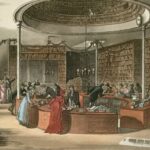
The Temple of the Muses was probably the largest single shop in 18th Century England. James Lackington’s trade card boasted it was “the finest shop in the world”. Arguably, Josiah Wedgwood’s intimate London showroom was more luxurious, showcasing his ceramics as if they were works of art, and admired by his elite clientele, including royalty….
» Continue Reading
The Four 18th-Century Publishers and Booksellers Who Made Reading Affordable

Today it is easy to forget that books were once luxury goods. A modern reader can buy a novel for a few pounds, download thousands of classics completely free, or borrow almost anything from a library. But in the early eighteenth century, owning a finely bound volume was a privilege reserved largely for the wealthy….
» Continue Reading
Why The Temple of the Muses is the Perfect Read for Women’s History Month

When researching an entirely different story in the autumn of 2022, I visited the ancient church of St Mary the Virgin, Merton. Walking among the gravestones, one caught my eye: Dorcas, Wife of J Lackington Bookseller, Finsbury Square Ladies who chance to frisk this way, With honest Hearts and Spirits gay. A serious moment give…
» Continue Reading
The Elephant in the Bookshop: The Paradox of an “Invisible” Workforce in London’s 18th Century Book Trade

Imagine stepping inside The Temple of the Muses in Finsbury Square — the bookshop famed in Georgian London as the largest in Europe. Shelves teem with novels, histories, pamphlets and curiosities. Priceless tomes sit side by side with cheap editions. Amid the bustle, male shop assistants in black frock-coats stand behind the circular counter underneath…
» Continue Reading
The Radical Idea of Affordable Books

Today, we take it for granted that books are within our grasp, but it wasn’t always so. By the late 18th century, literacy in England was steadily improving. Based on the ability to write their signature at the time of their marriages, historians estimate that approximately half of the population could read. But owning a…
» Continue Reading
Georgian London After the Gordon Riots

In the early summer of 1780, London erupted in one of the most violent chapters of civil unrest in British history. What began as a protest against proposed relief for Catholics spiralled into days of destruction, looting and terror that left swathes of the city in ruins. The Gordon Riots were more than a sudden…
» Continue Reading
What made Lackington’s the ideal publisher for Mary Shelley’s Frankenstein?
When Frankenstein; or, The Modern Prometheus appeared anonymously in January 1818, its title page read: London: Printed for Lackington, Hughes, Harding, Mavor & Jones, Finsbury Square. At first glance, the connection between Mary Shelley’s novel and the sprawling London book emporium known as The Temple of the Muses might seem accidental. But Lackington’s didn’t only…
» Continue Reading
The Bookseller’s Wife

I took a small research trip last week to the ancient church of St Mary’s in Merton. Small, because it’s only a ten-minute walk from my mother’s house. As a child, I took ballet lessons in the parish hall, but I rarely ventured inside the church, which dates from the tenth century. My intention was…
» Continue Reading